

• +91 9819161862
  • tejas.shah@kindleeducation.com
Kindle Education Services
  • Science Club
    • Activities
      • General Science
      • Physics
        • Mechanics
        • Sound and Waves
        • Thermodynamics
      • Chemistry
        • Matter and its Properties
        • Chemical Reactions
        • Acids, Bases and Salts
      • Biology
        • Cellular Biology
        • Genetics and Evolution
        • Human Biology
      • Astronomy
    • Resources
      • Apps and Websites
      • YouTube Channels
  • Maths Circle
  • Tinkering Lab
    • Build Challenges
      • Mechanics
      • Electrical and Electronics
  • Humanities Forum
  • Career Hub
Buoyant Force and Archimedes Principle

Buoyant Force and Archimedes Principle

Mechanics 4 minutes read

More than 2,000 years ago, a Greek scientist named Archimedes jumped out of his bath shouting “Eureka!” because he had just made a brilliant discovery about how things float and sink. His idea still explains why giant ships can stay afloat while tiny pebbles sink to the bottom.

In this activity, you will explore this very discovery for yourself. When you lower different objects into water, you will discover that the water pushes upward, almost as if it’s trying to lift them. You will see how this buoyant force depends on how much water is displaced – and by the end, you will understand the science behind floating boats, diving submarines, and even your favorite bath toys.
Read more: Buoyant Force and Archimedes Principle
Exploring the Principle of a Lever

Exploring the Principle of a Lever

Mechanics 3 minutes read

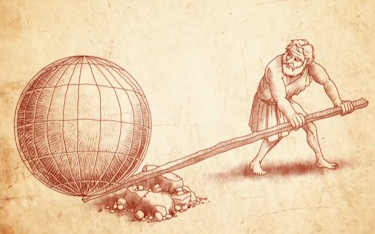
"Give me a lever long enough and a fulcrum on which to place it, and I shall move the world," declared the ancient Greek scientist Archimedes. He wasn’t exaggerating – he was revealing one of the most powerful ideas in science. Long before modern machines were invented, people used levers to lift stones, move logs, and build temples and pyramids. A lever is a simple tool, but it can do remarkable things – it lets you use a small force to move a large weight, just by changing how and where you apply that force.

In this activity, you will explore how levers work and discover for yourself how changing the position of the fulcrum, load, and effort can make lifting easier – just as Archimedes described thousands of years ago.

Read more: Exploring the Principle of a Lever
Simple Pendulum

Simple Pendulum

Mechanics 3 minutes read

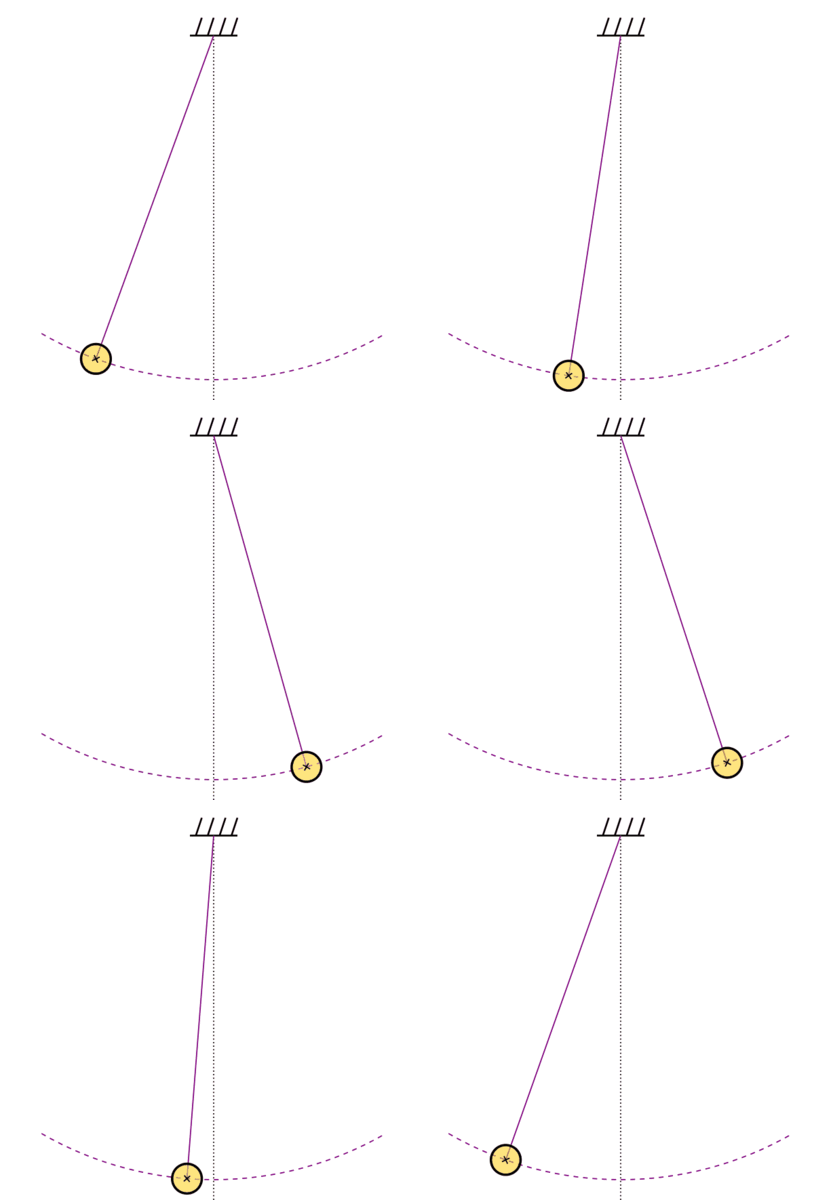
A pendulum swings with a graceful rhythm that seems almost magical – steady, smooth, and predictable. From the ticking of old grandfather clocks to the motion of playground swings, pendulums have fascinated scientists and inventors for centuries. They’ve been used to measure time, study motion, and even understand gravity.

In this activity, you will investigate what factors affect the speed of a pendulum’s swing. Does a heavier bob make it move faster? Or does the length of the string play a more important role? By observing, experimenting, and drawing conclusions, you will discover the key factor that determines the pendulum’s steady beat.

Read more: Simple Pendulum
© 2025 Kindle Education Services. Designed By JoomShaper.
Kindle Education Services
  • Science Club
    • Activities
      • General Science
      • Physics
        • Mechanics
        • Sound and Waves
        • Thermodynamics
      • Chemistry
        • Matter and its Properties
        • Chemical Reactions
        • Acids, Bases and Salts
      • Biology
        • Cellular Biology
        • Genetics and Evolution
        • Human Biology
      • Astronomy
    • Resources
      • Apps and Websites
      • YouTube Channels
  • Maths Circle
  • Tinkering Lab
    • Build Challenges
      • Mechanics
      • Electrical and Electronics
  • Humanities Forum
  • Career Hub
  • +91 9819161862
  • tejas.shah@kindleeducation.com